
to support digestion and help minimize GI side effects

to get the most nutrition in every bite

to help maintain muscle and strength
Pecans support satiety thanks to their unique mix of nutrients.

 Dietary Fiber
Pecans are a good source of fiber, providing 11% of the daily value.
 Protein
Pecans provide 3 grams of plant-based protein per serving.
 Unsaturated Fats
Pecans provide 18 grams of unsaturated fat per serving, including oleic acid - the primary fat found in olive oil, and only 2g of saturated fat.
 Polyphenols
Pecans have some of the highest concentration of polyphenols among common tree nuts.

Did you know?
Eating tree nuts is assocated with weight stability because of the impact on fullness and satiety.
2 Prater, M. C., Guadagni, A. J., & Cooper, J. A. (2024). Postprandialappetite responses to a pecan enriched meal: A randomizedcrossover trial. Appetite, 201, Article 107598. https://doi.org/10.1016/j.appet.2024.107598
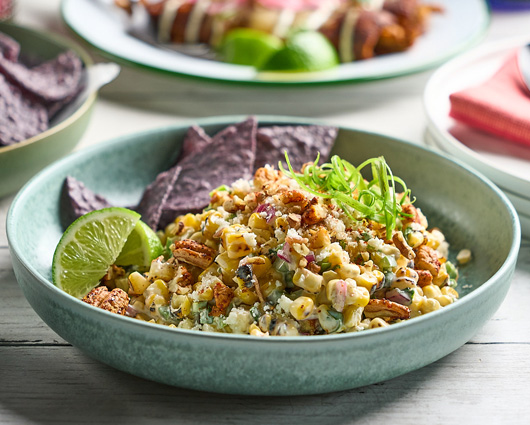
A study of healthy young adults compared similar calorie meals (785 calories) that included pecans and no pecans. Participants who had the meal with pecans reported increased fullness, increased PYY, decreased ghrelin and appetite.
2 Prater, M. C., Guadagni, A. J., & Cooper, J. A. (2024). Postprandialappetite responses to a pecan enriched meal: A randomizedcrossover trial. Appetite, 201, Article 107598. https://doi.org/10.1016/j.appet.2024.107598
An 8-week randomized controlled trial assigned adults at risk of cardiovascular disease to a group who added pecans, substituted pecans or a no-nuts group. The group where nuts were added to the diet for 8 weeks reduced food consumption and desire to eat. Pecans increased post-meal cholecystokinin (CCK), peptide PYY (PYY) and reduced post-meal ghrelin.
3 Guarneiri, L. L., Paton, C. M., & Cooper, J. A. (2022). Appetiteresponses to pecan-enriched diets. Appetite, 173, 106003.https://doi.org/10.1016/j.appet.2022.106003